Transportation Sector: How to Write Your Pitch Deck














Want to know exactly how VCs evaluate your transportation startup?
We’ve written this guide to unpack the inside baseball on how VCs evaluate transportation startups, and in turn how you can raise a successful round.
Informed by reviewing thousands of decks, and insights on which startups get the most traction on Deep Checks, this playbook helps put together a teaser deck that gets your first VC pitch scheduled.
We’ll go slide by slide on how investors decide whether or not to move forward with a startup. It’ll cover:
- Problem: Demonstrating you’re solving a burning pain point for your customers
- Solution: Show why you have the best solution to this problem
- Technical risk: How to convince investors to get behind the remaining technical risk that you have
- Why now?: Demonstrating why your startup has just become possible to build. This is make-or-break for many pitches
- Traction: How to show there’s demand for your product before the market has adopted it
- Business Model: How VCs think about your economics
- Market Size: Why bottom up beats top down
- Go to market: Showing you can become big enough, fast enough
- Competition: As markets become crowded, how to create defensibility
- Team: What makes for a world-class founding team?
- The Ask: Use of proceeds and round size
- Pitching: Do’s and dont’s of pitching your startup to VCs
Problem
Demonstrating you're solving a burning pain point for your customers
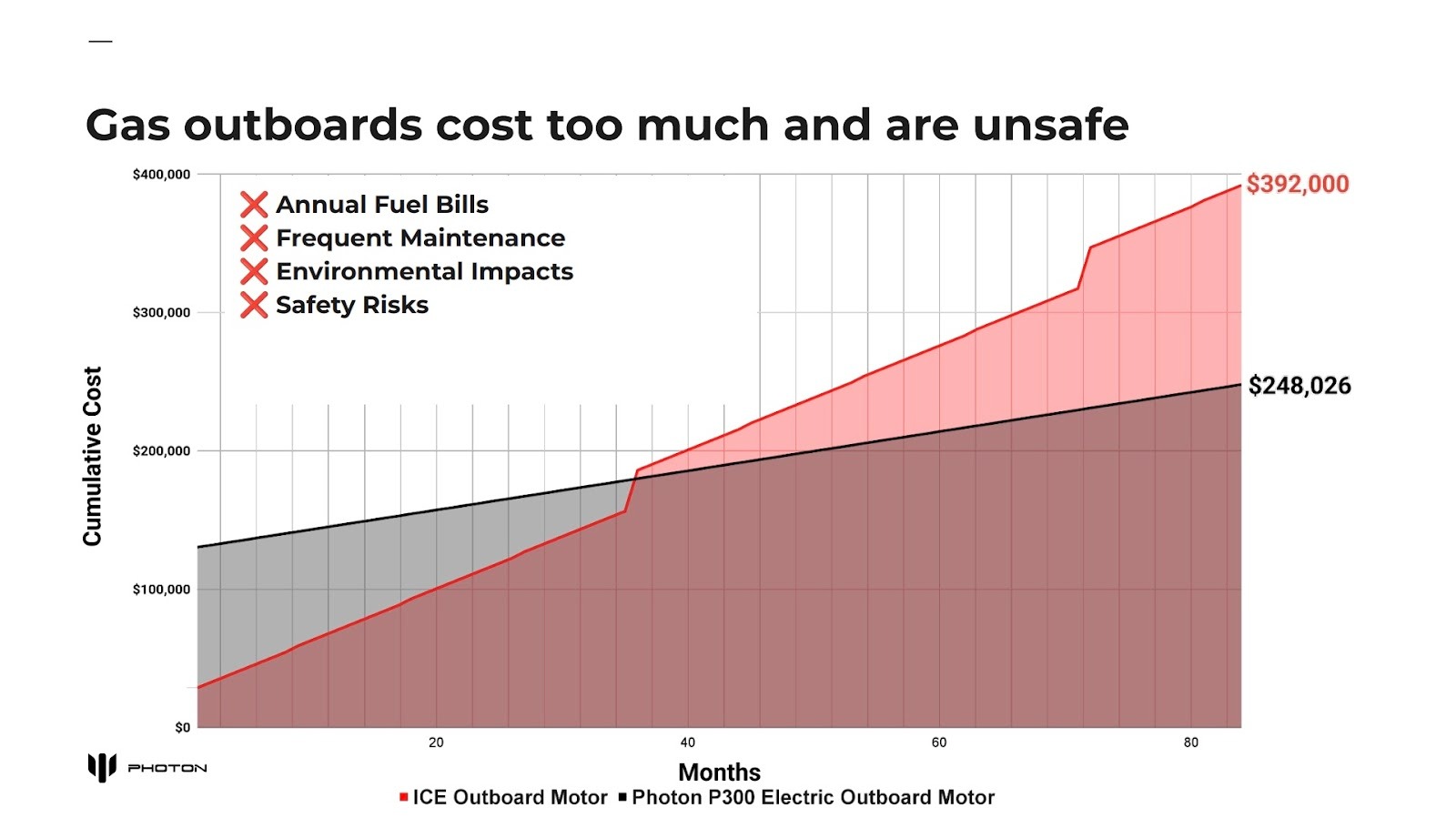
The problem slide exists to convince VCs the pain point you’re solving for your customers is a large, distinct, burning issue that they are willing to endure switching costs to solve.
Transportation problems typically fall into one of four categories: low carbon vehicles, alternative fuels, and emissions requirements, autonomy and labor costs, supply chain and manufacturing constraints, or infrastructure gaps. The most compelling pitches quantify the pain with specific metrics:
- Cost pressures: Fleet operators facing $50K+ annual fuel costs per vehicle with diesel at $4+/gallon, or commercial operators paying $150K+/year per driver while facing 70%+ annual turnover
- Regulatory requirements: Zero-emission mandates requiring 100% electric fleets by 2035-2040 in major markets, or customers losing contracts due to inability to meet Scope 3 emissions requirements
- Supply chain gaps: 18-24 month lead times for commercial EVs, battery cell shortages constraining production, or single-source dependencies on Asian suppliers for critical components. Lack of access and supply risk for critical minerals, and associated tariff risks.
- Infrastructure limitations: Charging infrastructure unable to support depot electrification, grid constraints limiting deployment locations, or lack of service networks for new vehicle types
The best way to portray your problem is to outline the explicit business constraint your customers are facing.
What gets VCs excited
- Problems with regulatory tailwinds (zero-emission mandates, carbon pricing) that make adoption mandatory, not optional
- Problems getting worse over time (driver shortages, emissions requirements, fuel costs)
- Economic pain that's 5-10x the cost of your solution
- Multi-stakeholder urgency (affects operations, finance, sustainability, and compliance teams)
Red flags
- "Nice to have" sustainability benefits without clear ROI, performance improvements, or regulatory drivers
- Problems that could be solved by incumbent OEMs with their next product cycle
- Focusing on technology gaps without tying in to customer business outcomes
- Problems that require massive infrastructure buildout or infeasible overhauls to existing production processes
Solution
Show why your solution is the best solution to this problem
The solutions slide demonstrates why you have the best solution to the problem your customers face.
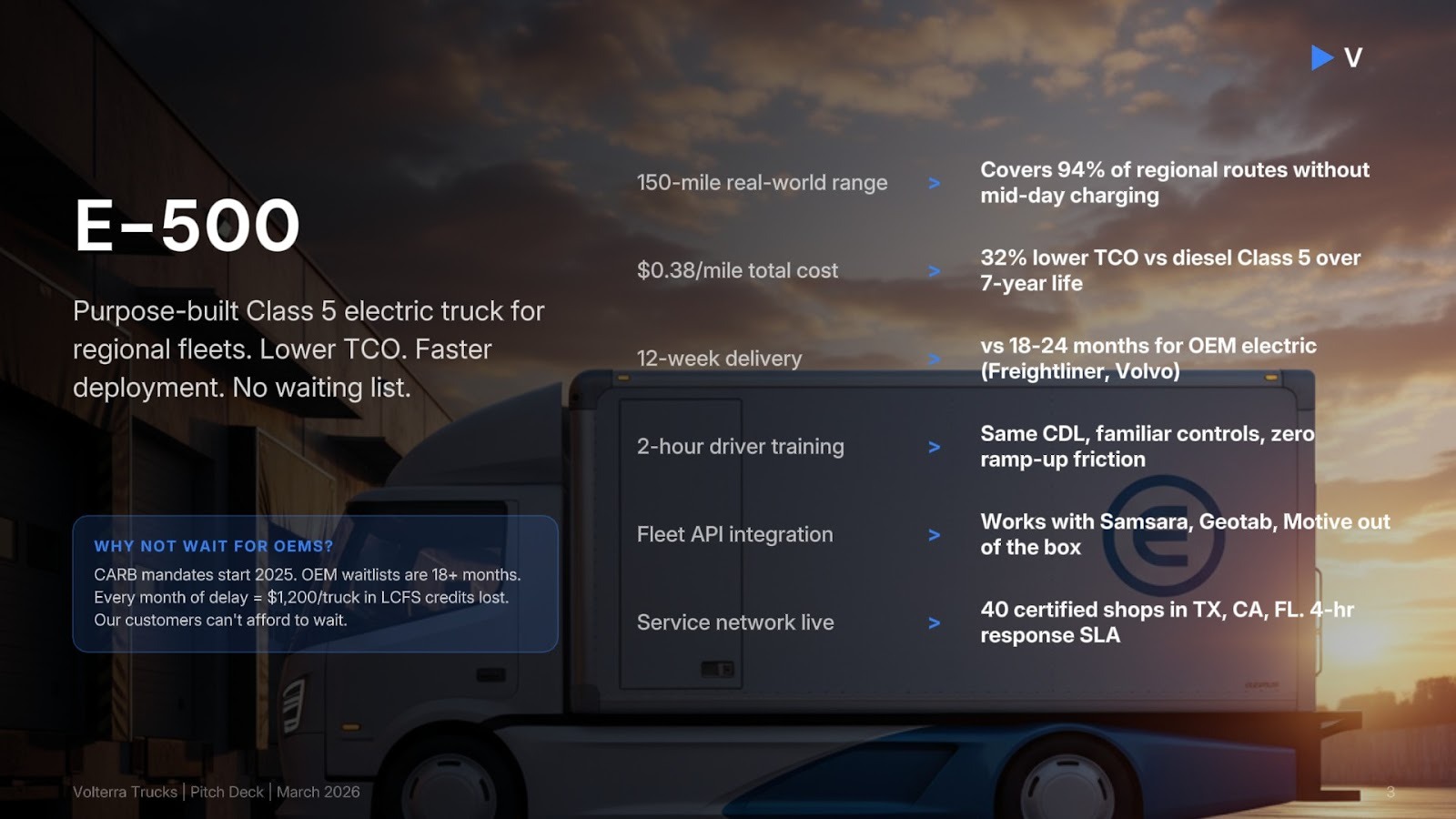
This is best framed by means of impact on customer business outcomes:
- Quantified TCO advantage: "Achieves $0.35/mile total cost of ownership versus $0.55/mile for diesel equivalents" rather than "500-mile range"
- Operational improvements: "Reduces driver training time from 3 weeks to 3 days" or "Operates 22 hours/day versus 11 hours with human drivers"
- Deployment speed: "Available for delivery in 6 months versus 24 months from incumbent OEMs" or "Converts existing fleet vehicles in 2 weeks"
- Ecosystem fit: "Integrates with existing fleet management systems and maintenance workflows" showing minimal operational disruption
Your solution slide should detail these benefits, showing why you solve their problem and are feasible to integrate into their regular workflows.
What gets VCs excited
- TCO parity or advantage versus incumbent solutions
- Solutions that address multiple pain points
- Evidence of real-world performance in customer operations
- Clear path to scaling production
Red flags
- Performance claims only under ideal conditions (flat terrain, mild weather, light loads)
- Claiming you'll beat Tesla/major OEMs on their core competencies
- No plan for service, parts, and support infrastructure
- Assuming ability to sell with a green premium
Technical Risk
How to convince investors to get behind the remaining technical risk that you have
After your solution slide, investors will want to know what your technology is, what your unique insight to be able to build it was, and what its technical readiness level is.
Deeptech venture investors typically accept engineering risk, and sometimes scientific risk (depending on risk appetite of the investor). Early stage VCs want to know:
- What has been proven
- What needs to be proven
- Why you're confident you'll achieve it
Technical risk generally spans vehicle engineering, manufacturing scale-up, and regulatory certification. As such, investors evaluate risk across multiple dimensions:
- Vehicle performance risk: Can you hit range, payload, and durability targets in real-world conditions? Show data from prototype testing across temperature extremes, terrain variability, and duty cycle variations.
- Manufacturing and scale-up risk: What's your path from prototype to 100 units to 10,000 units? Show contract manufacturing relationships, supply chain for critical components, and your production cost trajectory.
- Certification and regulatory risk: For on-road vehicles, what's your path to FMVSS certification? For autonomous systems, what's your regulatory strategy across different jurisdictions? Show what's achieved versus what's in progress.
- Supply chain risk: What are your dependencies on battery cells, motors, power electronics, or autonomy components? Show supplier relationships and how you manage single-source risk.
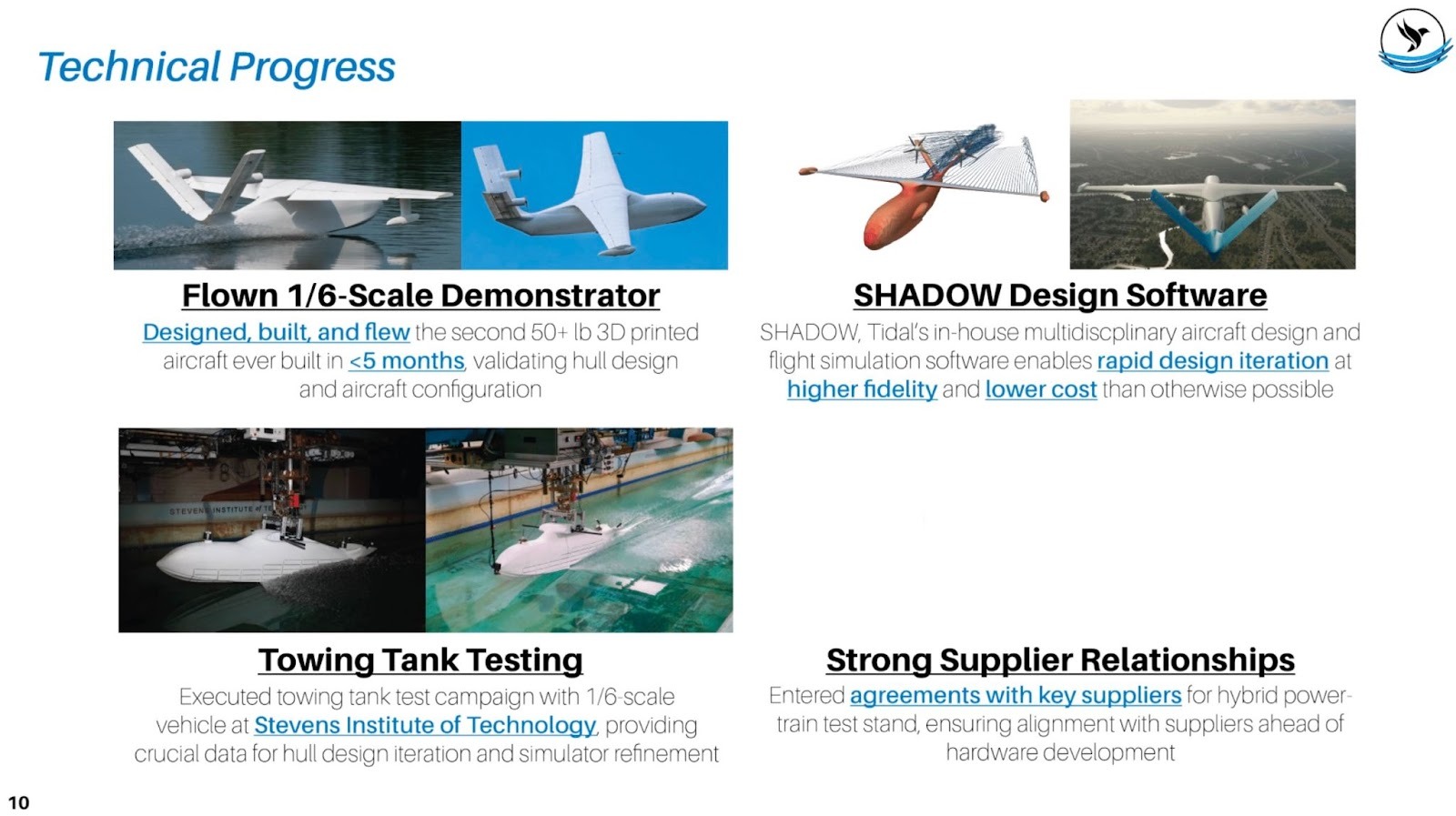
Your technical progress slide should show how far along this spectrum you are for key areas of de-risking relevant to your company. Strong slides include technical diagrams, your TRL level, and the performance specs you’ve achieved.
What gets VCs excited
- Vehicles already operating with documented performance data
- Clear certification pathway with a credible timeline
- Contract manufacturing partnerships that de-risk production scale-up
- Proprietary technology or design approaches that create defensible advantages
- Clear roadmap to retire technical risk
Red flags
- Unrealistic timelines for certification
- Reliance on unproven battery chemistry or autonomy approaches
- No clear path to securing critical component supply
Why Now
Demonstrating why your startup has just become possible to build
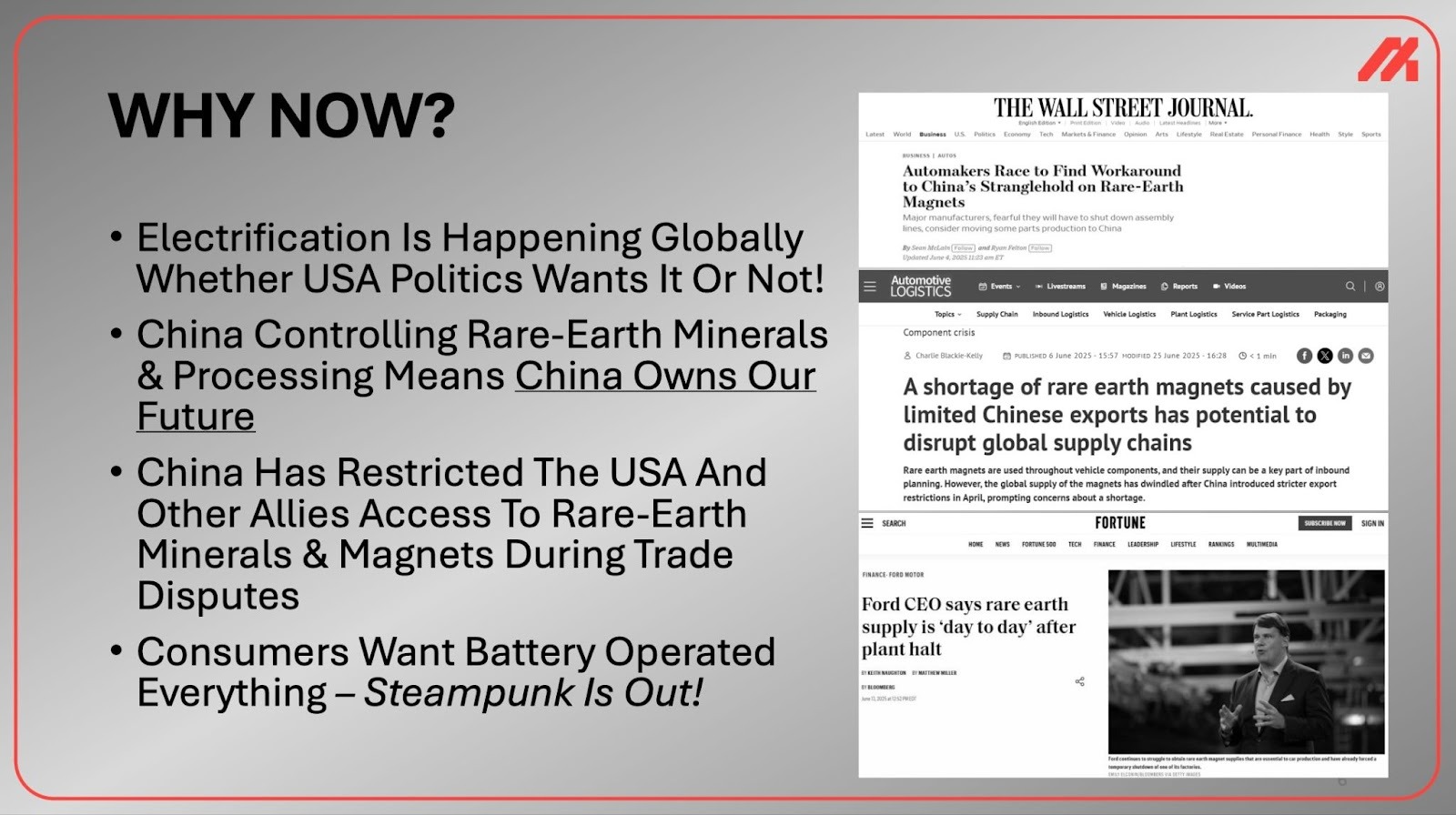
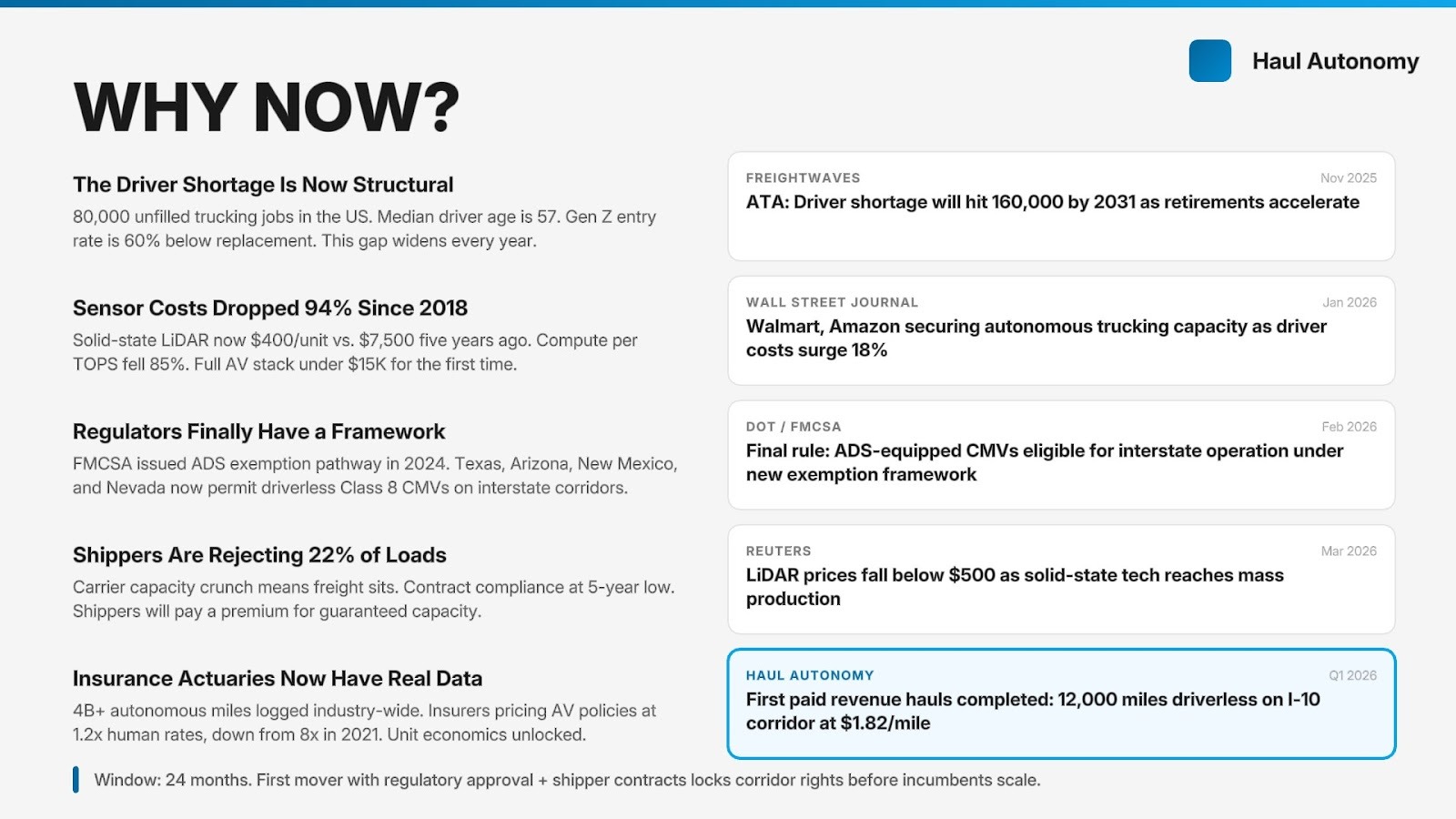
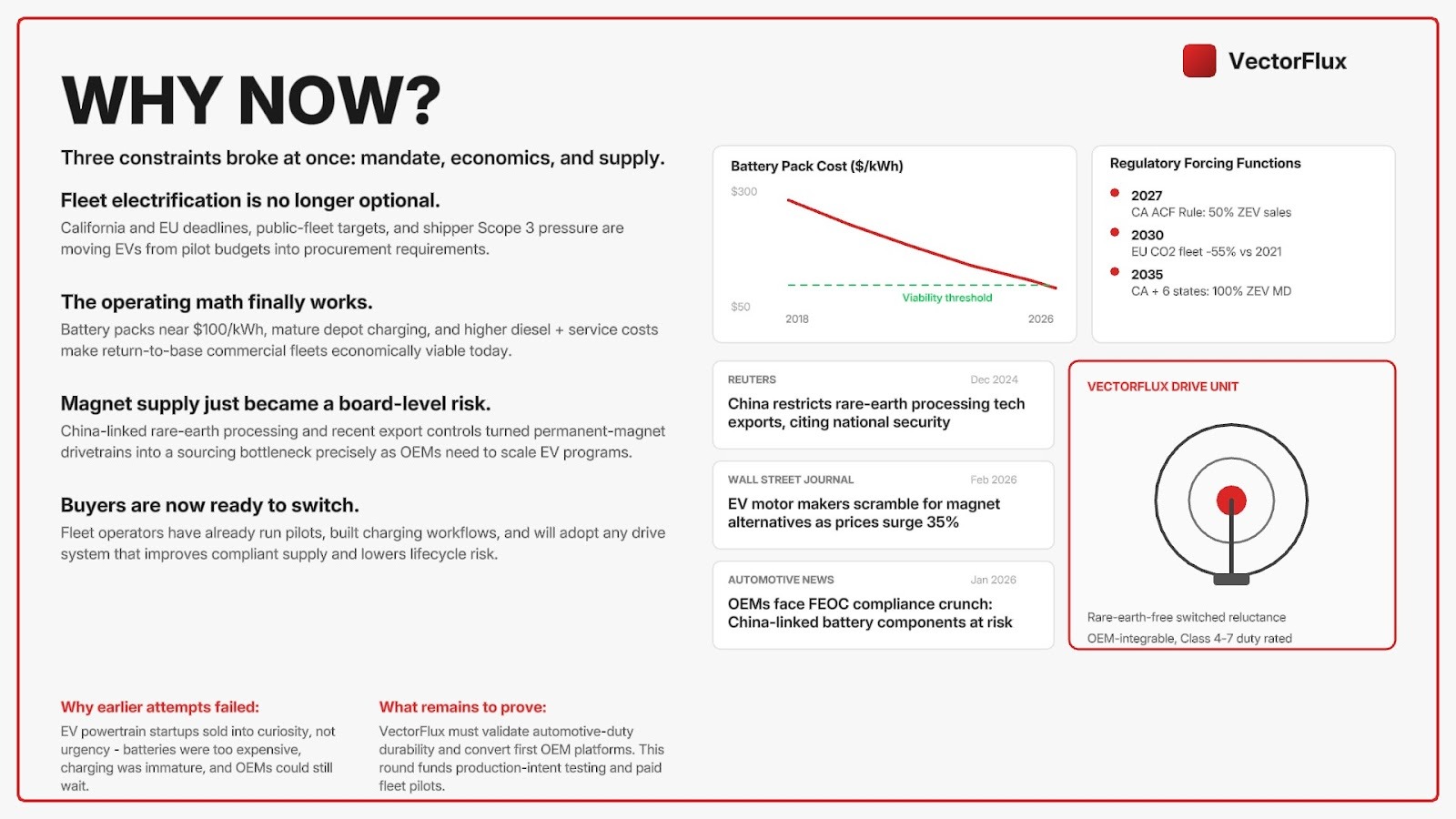
Many transportation ideas have been tried before and failed. By describing what has changed that makes it uniquely possible to build your business today, investors gain confidence that your idea doesn’t fit into the graveyard of prior attempts. These are generally inflection points across policy, technology, customer demand, and 3rd party infrastructure, such as:
- Regulatory and corporate commitment forcing functions: Zero-emission vehicle mandates in California (2035), EU (2035), and other major markets make fleet electrification mandatory. Corporate Scope 3 requirements and emissions commitments are forcing fleet customers to act now.
- Battery cost curves: Battery pack costs have dropped from $1,000/kWh in 2010 to ~$100/kWh today. This makes hybrid and EV economics viable for applications that were impossible 5 years ago.
- Policy incentives: The CHIPS Act and IRA have unlocked billions in manufacturing incentives. FEOC requirements are driving demand for non-China supply chains.
- Customer readiness: Commercial fleet operators now have 3-5 years of EV deployment experience. They understand the technology, have charging infrastructure, and are ready to scale.
- Autonomy technology maturation: ADAS components (sensors, compute) have commoditized due to passenger vehicle volumes, making commercial autonomy economically viable.
The most credible "why now" arguments combine 2-3 factors. For example: "Battery costs make our economics work, zero-emission mandates create urgency, and major OEMs can't deliver vehicles for 3+ years.".
Your “why now” slide should show the confluence of trends making your startup uniquely possible today.
What gets VCs excited
- Specific regulatory deadlines that create non-optional demand
- Quantified technology cost curves that recently crossed viability thresholds
- Evidence that customer buying behavior has shifted
- Clear explanation of why previous similar attempts failed and what's different now
Red flags
- Generic claims about the EV transition without specific enabling changes
- "Why now" based on hypothetical future improvements
- Ignoring the history of failed EV and autonomy companies
Traction
How to show there's demand for your product before the market has adopted it
The traction slide helps investors understand how far you’ve de-risked demand and customer purchase intent, and get a sense for your commercial acumen.
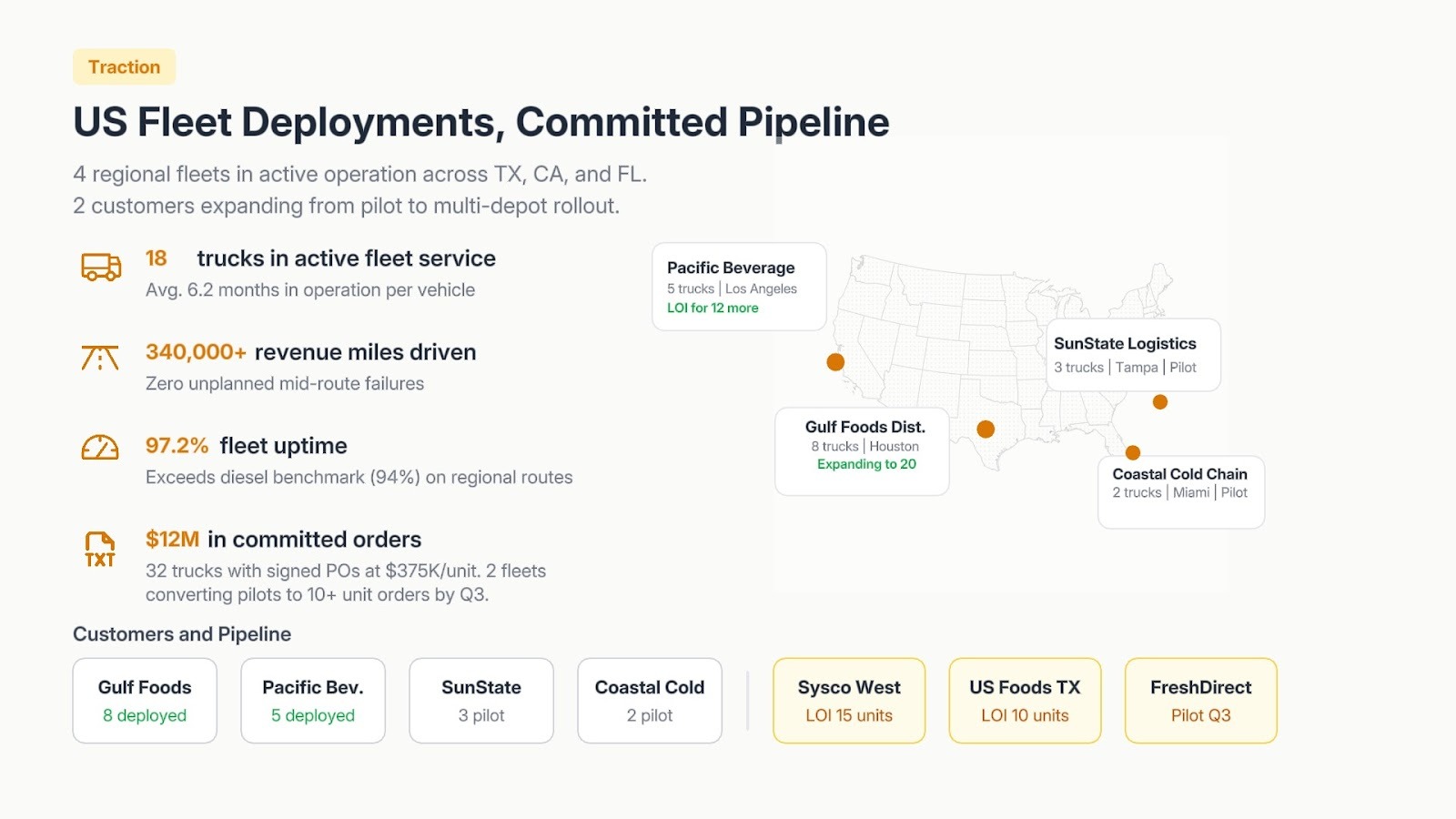
Traction can be demonstrated through four means:
- Fleet deployments (most valuable): Vehicles or your tech operating in real customer fleets with documented utilization, uptime, and performance data. Even 5-10 units generating real operational data is valuable.
- Purchase orders and LOIs: Customers who have committed to purchase volumes upon successful pilot completion. This should include specific quantities, pricing, and conditions.
- Development partnerships: Customer co-development where they're investing resources (engineering time, depot modifications, operational data sharing).
- Customer discovery depth: For pre-product companies, show 30+ customer conversations documenting specific requirements, willingness-to-pay, and purchase timelines.
Your traction slide should demonstrate how far you’ve gotten across any and all of these dimensions. It can include things like the size of your active pipeline, LOIs, signed agreements or pilots.
What gets VCs excited
- Vehicles deployed in customer operations with documented performance
- A pathway to fleet expansion from pilot customers
- Purchase commitments with specific volumes and delivery timelines
- Customer champions willing to speak with investors
- Inbound demand from customers who discovered you organically
Red flags
- Only internal testing without customer deployments
- LOIs without specific quantities, pricing, or conditions
- Single customer concentration
- Pilots that don't convert to orders
- Long sales cycles without interim validation milestones
Business Model
How VCs think about your economics
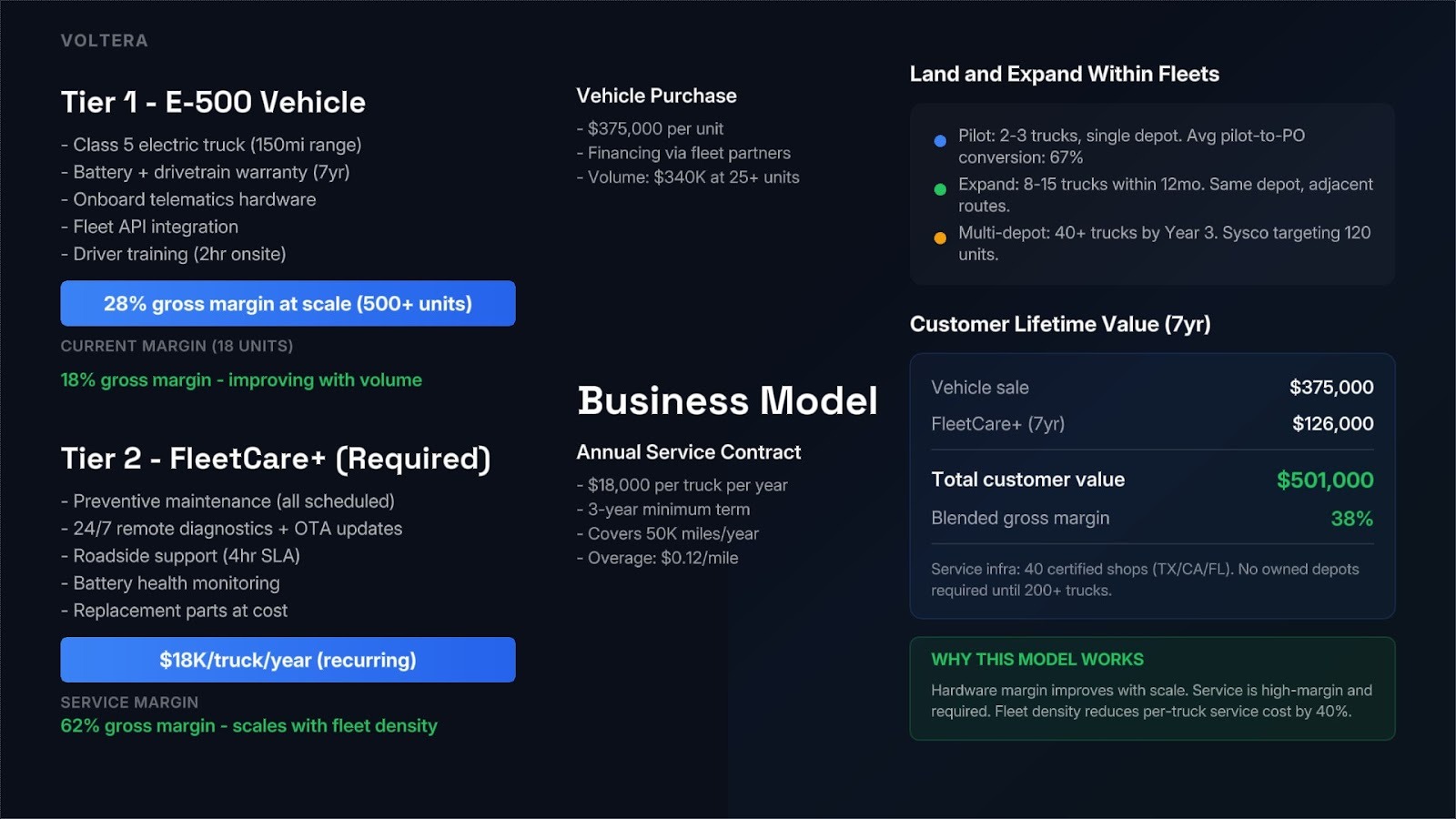
Your business model slide should include how you make money, the price point to your end customers, and margin you are able to achieve yourself. This slide helps VCs understand the margin potential of your business, and stress test your anticipated customer pricing.
There are a handful of common business models VCs see in transportation that each have their own trade offs.
- Vehicle/equipment sales: Sell vehicles or equipment directly. Typical gross margins 15-25% for vehicles, 30-50% for components/systems. Simpler model but requires more upfront customer capital and financing.
- Vehicle/equipment-as-a-Service: Fleet customers pay monthly per vehicle or product. Creates recurring revenue and aligns incentives, but requires a strong financial model detailing your revenue after financing, plans for maintenance, etc.
- Usage-based pricing: Revenue per mile, per delivery, or per trip. Aligns pricing with customer value, has similar considerations regarding plans for service if a component or vehicle breaks.
- Component/technology sales: Sell key technology (batteries, drivetrains, autonomy systems) to other manufacturers. Captures less of the value chain, but is more capital-light with higher margins.
Your business model slide should include which of these business models you have, the total cost to your customers, and the margins you can achieve at scale.
What gets VCs excited
- Clear path to strong gross margins at scale
- Evidence of pricing power versus alternatives
- Recurring revenue within the business model
- Land-and-expand dynamics within customer fleets
Red flags
- Low gross margins
- Service costs that scale linearly with fleet size
- Pricing assumptions customers haven't validated
- Capital intensity without clear path to profitability
Market Size
Why bottom up beats top down
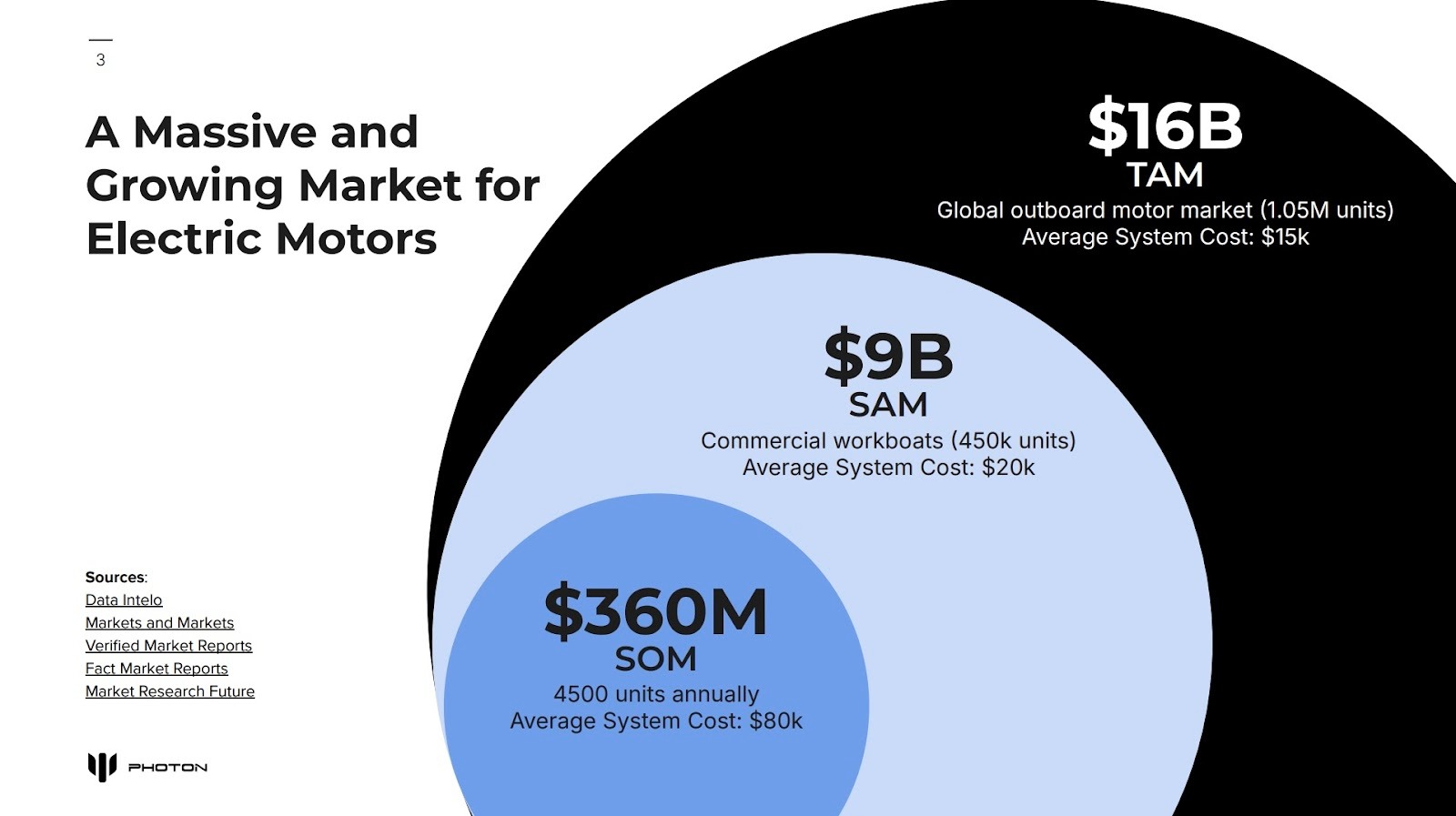
Your market sizing slide should be broken down into your:
Total Addressable Market (TAM) The total revenue opportunity if you achieved 100% market share across all potential customers globally. Total potential customers × Annual revenue per customer
Serviceable Addressable Market (SAM) The portion of TAM you can realistically reach given your business model, geographic focus, and current capabilities. Customers matching your target profile and location × Annual revenue per customer
Serviceable Obtainable Market (SOM) The market share you can realistically capture in the next 1-3 years, accounting for competition and resources. SAM × Realistic market share % that you could target over the next few years
This method of calculating these numbers is much preferred to “top down” market sizing, where you infer total demand based on high level industry numbers. This is because VCs want to understand how large your business can get. The TAM might be $5B, but if you price 1/10th of comparable products, the amount of market you can capture might be $500M.
It’s ok to lean towards top down if bottom up is hard to quantify, as well to have market sizes picked from estimates into the future (ie 2030 market size is X), so long as it’s clearly labeled how you’re getting to those conclusions.
By building a bottom up market sizing (especially for SOM and SAM), your market sizing carries more weight.
What gets VCs excited
- TAM >$5B with defensible bottom-up math
- SOM representing a $100M+ revenue opportunity
- Market sizing validated by customer conversations
Red flags
- Top-down market sizing only
- Market size that doesn't match customer deployment realities
- Adding disconnected segments (trucks + buses + marine + aviation)
Go to Market
Showing you can become big enough, fast enough
Within the pitch, the most important question to answer is how your GTM motion can support a venture scale amount of revenue ( $100M+) within the decade timeframe of a venture fund. VCs will generally use this slide to get to understand your depth of knowledge on the sales cycle and customer purchasing dynamics.
As such, this slide should outline who your customers are, how you reach them, and how your GTM segmentation (customer types and segments you target) evolves with scale.
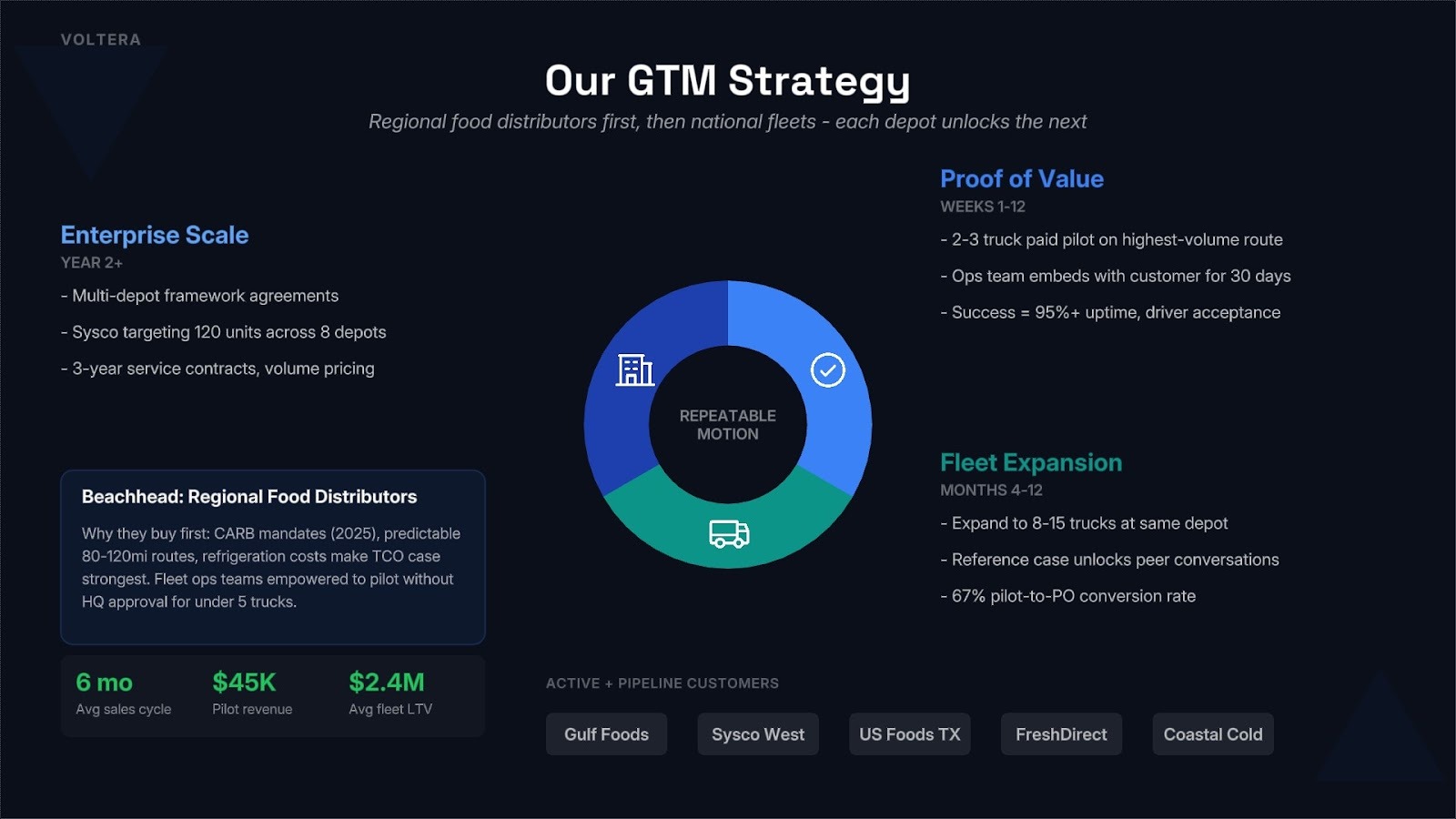
What gets VCs excited
- Clear beachhead with repeatable sales motion
- LOIs or pilots with clear contract conversion guidance
- Customer references willing to advocate publicly
Red flags
- Assuming short sales cycles
- No clear customer segmentation
- Pilots that don't convert
Competition
As markets become crowded, how to create defensibility
You need to show how you compete against the status quo, incremental improvements of leading OEMs, and future technologies from emerging startups.
The strongest defensibility arguments show why incumbents won’t try to copy you, and how you will be able to become entrenched before other competitive attempts emerge.
Your competition slide should demonstrate how you stack up on the factors that matter most to your end customers, as compared to the existing suite of competition.
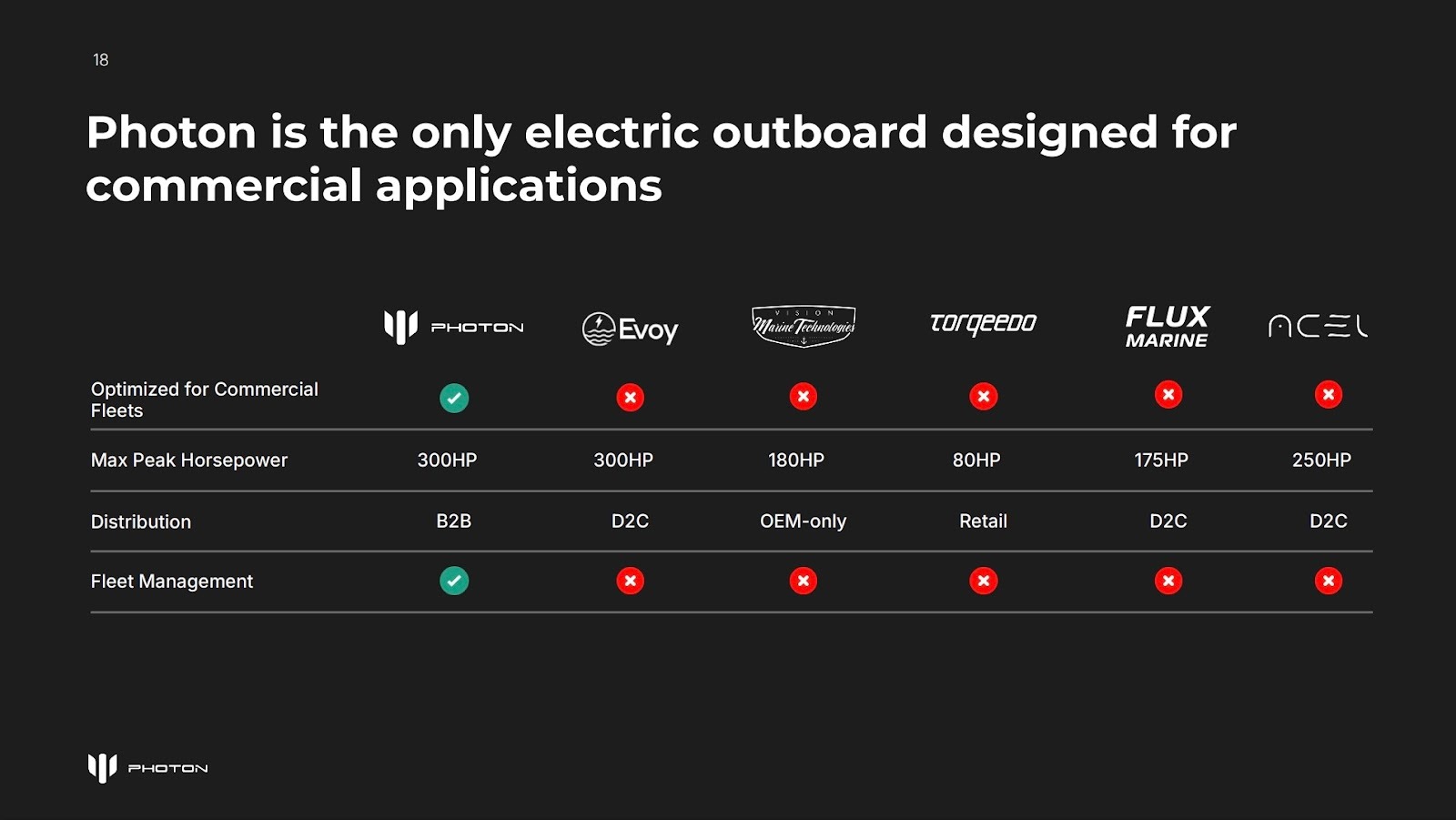
What gets VCs excited
- Purpose-built vehicle architecture with clear performance advantages
- Customer validation that your differentiators matter
- Service and support infrastructure that creates switching costs
- IP protection on key innovations
Red flags
- "No competitors" (there are always alternatives)
- Competing on axes customers don't prioritize
- No clear answer to major OEM competitive threat
- Differentiation easily replicated by well-funded competitors
Team
What makes for a world-class founding team?
At Julian Capital, we’ve written about what makes a great founding team here. We're excited by founding teams who are:
- Commercially minded with technical depth
- Building their life's work—the culmination of their career or their final pursuit
- Ambitious enough to scale to $1B+ valuation
- Relentlessly resourceful with high agency
- Persuasive and authentic storytellers
- Comprehensive in thinking through all business avenues (GTM, competitive landscape, bottom-up TAM, etc)
Transportation teams generally require deep expertise in vehicle engineering, manufacturing, and fleet operations. The strongest teams combine:
- Vehicle engineering expertise: Someone who has developed and launched production vehicles. Understands vehicle architecture, systems integration, and automotive development processes.
- Manufacturing experience: Experience scaling vehicle production—supply chain, quality, cost reduction.
- Fleet operations knowledge: Deep understanding of how fleets operate, buy, and maintain vehicles. Ideally someone from the customer side who knows what matters.
- Regulatory expertise: Understanding of FMVSS, EPA, CARB, and other regulatory requirements. Path to certification is often underestimated.
- OEM Experience: Knowledge of how to navigate OEM integration.
Of course, not all are absolutely necessary. Your team slide should demonstrate how far along these qualifications you bring to the table, and any other expertise or prior experience that’s particularly relevant.
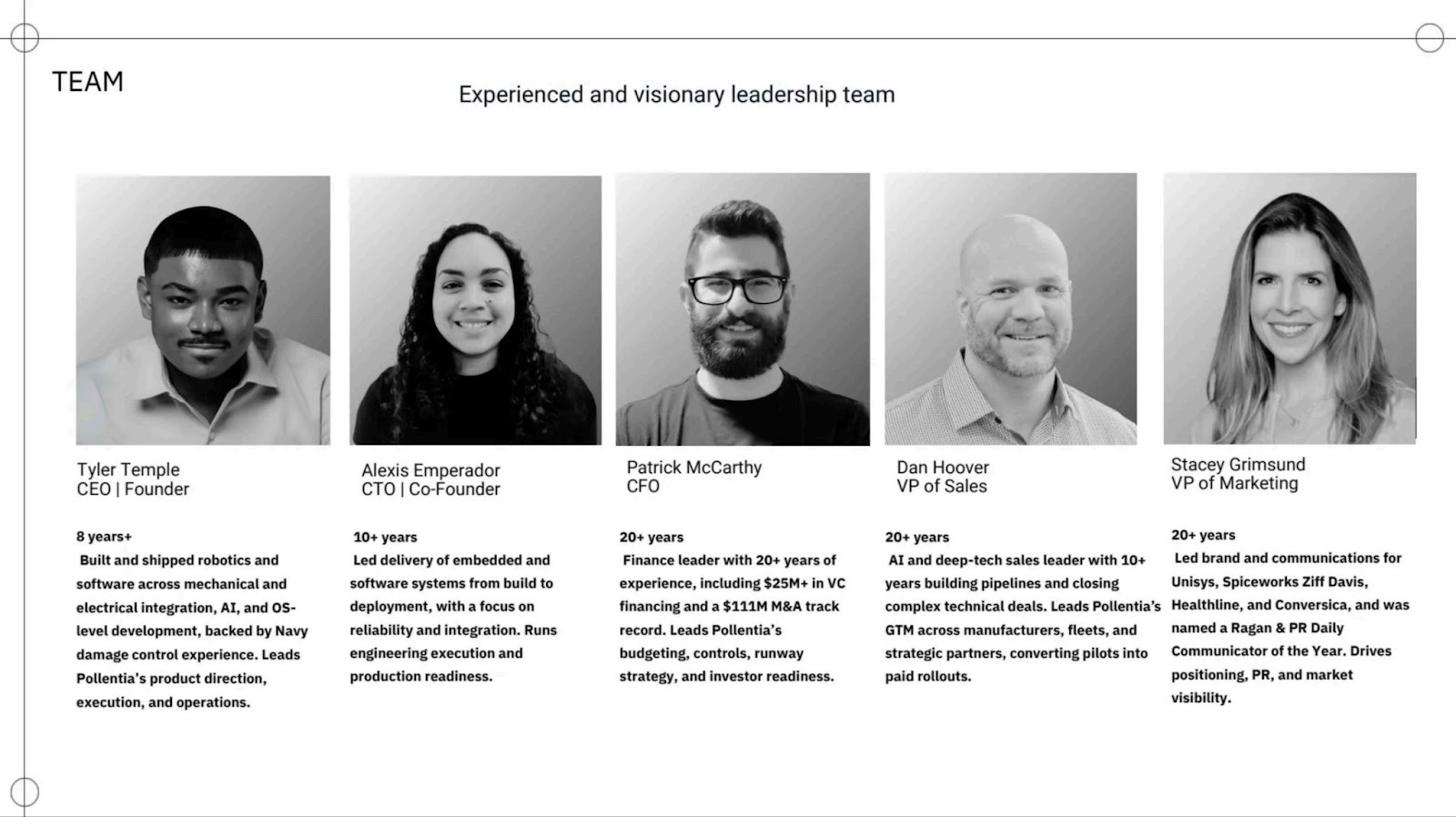
What gets VCs excited
- Teams combining vehicle engineering, manufacturing, and commercial expertise
- Founders who have shipped production vehicles before
- Deep customer relationships in target segments
- Track record of attracting top automotive talent
Red flags
- Lack of clarity around production economics
- Downplaying risk of OEMs encroaching on an area that’s feasibly in their roadmap
- Lack of industry experience, and no evidence of catching up via customer discovery
The Ask: Use of proceeds and round size
The ask shows how much you are raising and what you plan to accomplish with it. We wrote about choosing how much to raise here.
You should account for the capital required to build and manufacture prototypes, and pursue your initial GTM. Investors want to see that your raise gets you to clearly defined technical and commercial milestones.
Ground the raise in specific operational milestones: first revenue miles, fleet expansion, regulatory certification, or a commercial partnership.
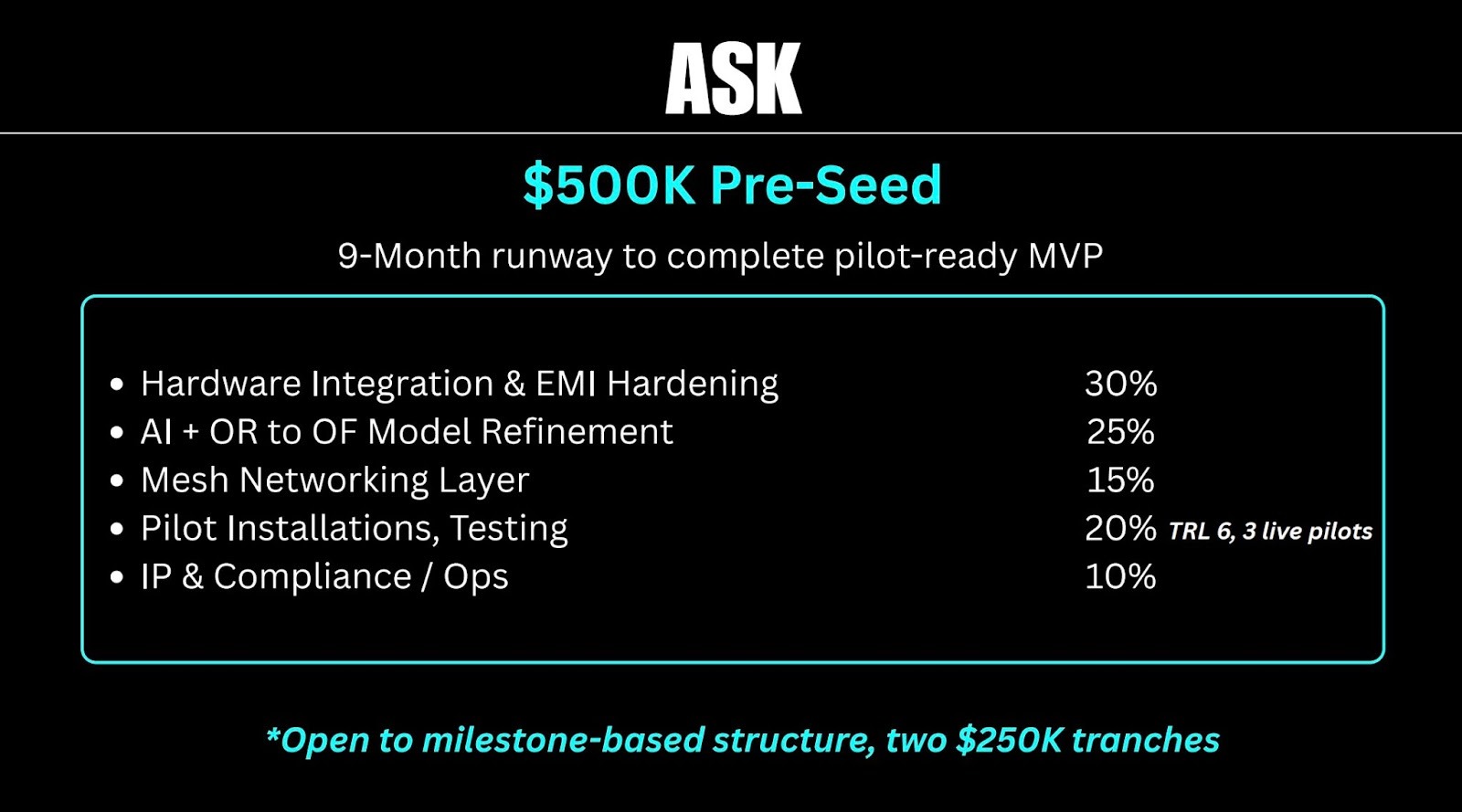
What gets VCs excited
- Clear milestone orientation: first certified vehicle, first commercial route, first fleet contract
- Explicit acknowledgment of what should be financed through asset-backed structures rather than equity
- Regulatory pathway clarity—FMCSA, FAA, NHTSA certifications—with a timeline and budget
- Strategic partnerships (OEMs, fleet operators, logistics companies) that accelerate commercial deployment or reduce capital requirements
- Use of proceeds that balances technical completion with early commercial traction
Red flags
- Using equity to fund fleet assets that could be financed through leasing or debt
- No regulatory timeline or budget—certification is consistently the longest, most expensive surprise in transportation hardware
- Raise sized on optimistic fleet deployment timelines without accounting for sales cycle length
- Conflating pilot deployment with commercial revenue—one passenger or one route is not a business
- No clear answer on what the unit economics look like at the fleet scale this round enables
Pitching: Do's & Don'ts
Here's how (and how not) to pitch:
The best pitches are conversational. Answers should be succinct yet demonstrate depth of thought.
Great founders bridge vision with detail. They intimately understand their problem space and can explain it clearly—both the problem and the system around it. They understand the path to scale and can map how the business will evolve getting there.
Do
- Lead with fleet economics, not vehicle specs: Start with "Fleet operators spend $500K/year on fuel that could be eliminated" not "We built an electric truck with 300-mile range."
- Show real-world performance: Video of your vehicle in customer operations, uptime data, driver feedback. Better than specifications.
- Be honest about what's not ready: "Our current prototypes achieve 85% uptime; production vehicles need 95%" builds credibility.
- Know your unit economics cold: COGS breakdown, service costs per vehicle, path to margin improvement.
- Demonstrate customer intimacy: "The fleet maintenance manager needs to see 2-year TCO savings and <4 hour service response time."
- Address manufacturing and certification upfront: Address regulatory timeline, certification strategy, and supply chain proactively.
Common traps
- Technology-first framing: Leading with "We built an amazing vehicle" instead of "We solve a $10B fleet operations problem."
- Unrealistic timelines: Vehicle development takes 3-5 years from concept to production. Be realistic.
- Ignoring manufacturing challenges: If you don't have manufacturing experience, acknowledge the risk and show how you're addressing it.
- Ignoring ecosystem requirements: Focusing on vehicle development while ignoring charging, service, parts, and training.
We hope this guide was useful to you! If you'd like to get in touch, don't hesitate to reach out to Julian.Capital or Yamaha Motor Ventures, and apply in <1 minute to get put in touch with thesis fit investors for free at DeepChecks.VC.